
Graph & Persistent Memory
Knowledge Graph for AI Agents: A Practical Guide
Vector search finds similar text. It doesn't answer relationship questions. A knowledge graph for AI agents does.
Updated · 5 min read
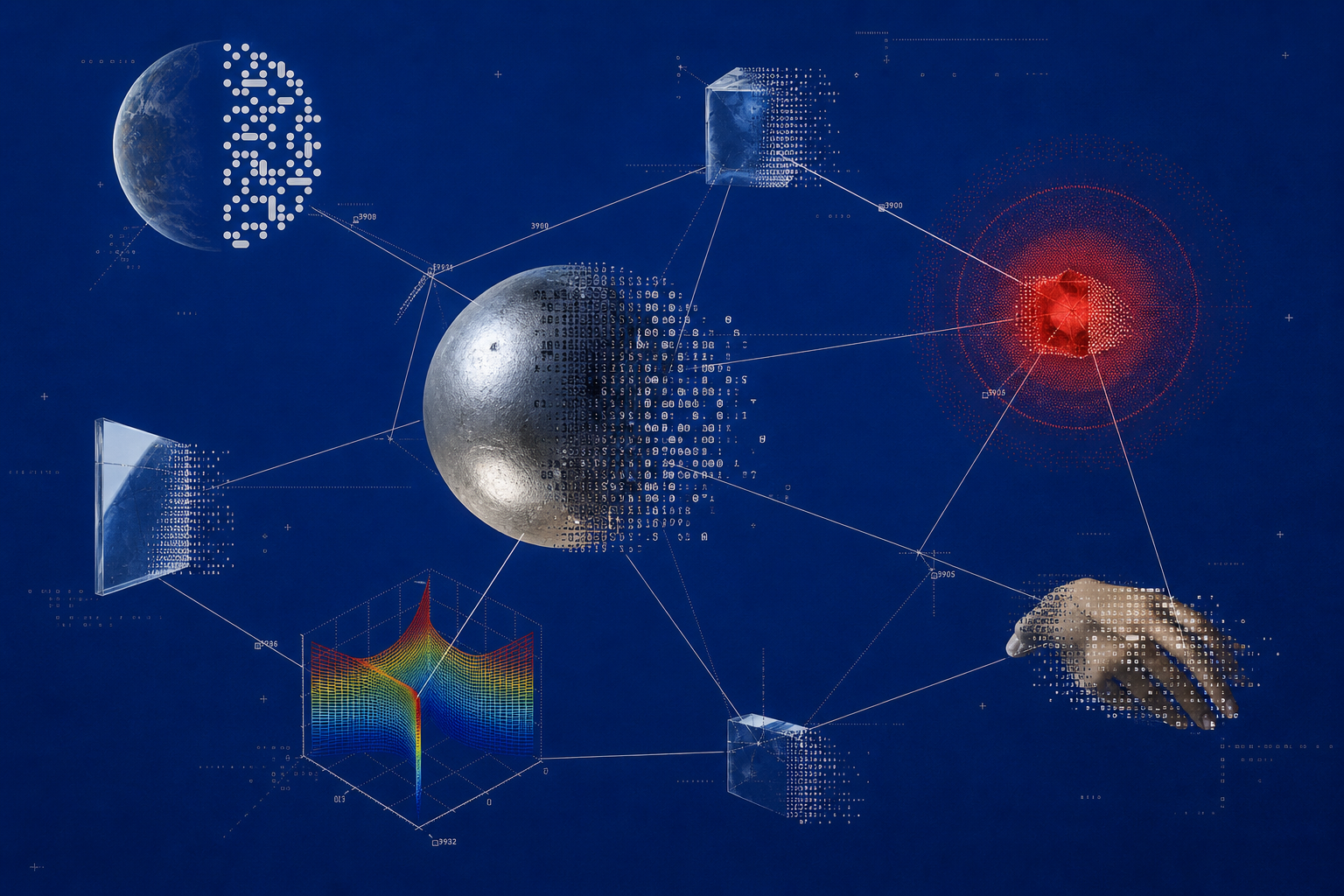
Ask an agent "which of Acme's servers use the config Alex changed last month" and a plain text search has no good way to answer, the words "servers", "config", and "Alex" might not even appear together in any single stored memory. What the question actually needs is a structure that connects Acme, its servers, the config, and Alex explicitly, so the answer can be found by following relationships rather than matching words.
That structure is a knowledge graph: entities (Acme, the servers, the config, Alex) connected by explicit, typed relationships (owns, uses, changed). A knowledge graph for AI agents applies the same idea to what an agent learns over time, turning loose facts into a connected structure an agent can actually traverse, not just search.
This isn't a niche capability reserved for large teams running dedicated infrastructure. Any agent that operates across more than a handful of sessions runs into relational questions eventually, which system does this depend on, who owns this decision, what superseded that earlier fact, and a memory system with no answer for those questions leaves an agent guessing at exactly the moments precision matters most.
What is a knowledge graph, exactly?
A knowledge graph represents information as nodes (entities: people, systems, concepts) and edges (relationships between them: owns, depends-on, mentioned-in). Unlike a flat list of documents or facts, a graph makes the connections between things first-class, so a query can follow a chain of relationships, not just match on similarity or keywords.
For AI agents specifically, the entities are usually things the agent encounters while doing work, users, projects, tools, decisions, and the relationships are how those things connect: which agent wrote which memory, which decision affected which system, which fact superseded an earlier one.
Why AI agents need graph-structured memory
A 2023 study on generative agents found that structuring an agent's memory as retrievable, related records produced noticeably more coherent long-term behavior than treating memory as an undifferentiated stream of text. The reason is intuitive: real questions an agent needs to answer are often relational, not just topical, "what does X depend on" is a graph traversal, not a similarity search.
Graph structure also makes memory auditable in a way flat storage doesn't. Because entities and relationships are explicit, you can see exactly what an agent believes is connected to what, and correct a specific edge, this fact no longer applies to that system, without having to find and rewrite every loosely related memory that touches it.
Knowledge graphs vs pure vector memory
A vector store answers "what's semantically similar to this" well and answers "what is directly connected to this" poorly, since similarity and explicit relationship are genuinely different signals. A knowledge graph inverts that: it excels at relationship questions and multi-hop reasoning, but doesn't inherently rank results by semantic closeness the way vector search does.
Neither approach alone covers what a real agent needs, which is why most production systems combine both rather than choosing one. A graph provides the structure and relationships; vector embeddings provide semantic recall over free-text content that doesn't fit neatly into an entity-relationship model.
Graph memory vs vector memory in practice
It helps to think about graph memory and vector memory as answering different question shapes rather than competing on the same axis. "What's similar to X" is a vector question. "What is X connected to, and what is that connected to" is a graph question. A production agent runs into both shapes constantly, sometimes within the same task, so a memory system that only answers one shape well will feel reliable on half its queries and frustrating on the other half.
A concrete example makes this clearer. Ask an agent to "find memories about the Q3 outage" and vector similarity handles it fine, that's a topical, semantic match. Ask it to "find everything that changed because of the Q3 outage" and you need graph memory: an explicit trail of what-caused-what that vector similarity alone has no way to represent, since causation isn't the same signal as topical similarity, even when the two overlap in practice.
Common mistakes when building a knowledge graph for AI agents
The most frequent mistake is over-modeling upfront: designing a rigid, hand-built schema of entity and relationship types before any real usage data exists to justify it. A knowledge graph for AI agents built this way tends to break the first time a fact doesn't fit the predefined shape, and by then a team has usually sunk real effort into a schema that needs reworking rather than extending. It's generally safer to let the graph's structure emerge from what agents actually write, with extraction that can introduce new entity and relationship types as needed, than to lock the shape in before you have evidence for it.
The second common mistake is treating every relationship as permanent. Facts change: a person changes teams, a service gets deprecated, a decision gets reversed. A knowledge graph for AI agents that only ever adds edges and never supersedes them accumulates contradictions over time, an old relationship and a new one both marked as current, with no way for a query to know which one to trust. Building supersession into the graph from the start, rather than bolting it on after the contradictions pile up, is far cheaper in the long run.
How a knowledge graph for AI agents gets built
In practice, building the graph is mostly automated: as an agent writes memories, an extraction step identifies entities (a person, a system, a project) and the relationships between them, and adds both to the graph incrementally. A well-built system does this on every write, so the graph grows and stays current without a separate, manual curation step.
The harder problem is usually disambiguation and updates: recognizing that "Acme's staging server" mentioned today is the same entity as "the staging box" mentioned last week, and correctly superseding old relationships when something changes rather than letting contradictory facts accumulate side by side. Getting disambiguation wrong quietly fragments the graph into near-duplicate entities that each hold part of the truth, which is often harder to notice and fix than an outright missing fact, since nothing looks broken until a query returns an incomplete answer built from only one of the fragments.
How stored builds the graph for you
stored's live memory graph does this extraction automatically: as your agents write memories, entities and the relationships between them appear in the graph in real time, browsable and searchable from the dashboard, no manual graph modeling or a separate graph database to operate.
That graph is also just one leg of retrieval, not the whole system. Every query runs hybrid retrieval across the graph, vector similarity, and full-text search together, so relationship questions, semantic questions, and exact-term questions all get answered from the same query instead of needing three separate systems. Supersession is also handled automatically: when a new memory contradicts an older one, the older relationship gets marked outdated rather than left to sit alongside the current fact, so a query returns what's true now instead of a mix of stale and current answers.
Frequently asked questions
What is a knowledge graph for AI agents used for?
It structures what an agent learns as entities and explicit relationships between them, so the agent can answer relational questions, like which systems a change affects, that a flat text or vector search can't reliably answer.
Is a knowledge graph better than a vector database for agent memory?
Neither replaces the other. A knowledge graph handles relationships and multi-hop reasoning well; a vector database handles semantic similarity over free-text well. Production systems typically combine both rather than choosing one.
Do I need to manually build the graph for my AI agent?
Not with a well-built memory system. Entity and relationship extraction can happen automatically as an agent writes memories, so the graph builds itself incrementally instead of requiring manual graph modeling.
How do you update a knowledge graph when facts change?
A well-designed system supersedes the outdated relationship rather than letting it sit alongside the new one, so a query returns the current fact instead of a contradictory mix of old and new information.
Related reading
AI Agent Memory: What It Is and How to Build It
Context windows reset. AI agent memory doesn't. Here's what agent memory actually is, why it matters, and how teams build it in production.
Hybrid Search: Combining Vector, Keyword, and Graph Retrieval
No single retrieval method catches everything. Hybrid search combines vector, keyword, and graph lookup into one ranked result.

AI Memory Provenance: Knowing Where a Memory Came From
An agent that's wrong is a bug. An agent that's wrong and unauditable is a liability. Provenance is the difference.